The first day I arrived in Kampala I attended a salsa dance class with my Canadian colleague Carolyn which was part of a couch surfing event (couch surfing is a community in which people invite travelers to stay on their couch (or beds) while they are in town). It was my first time attempting salsa dance and I was quite amused by the Mzee (swahili for old man) who took my hand and made sure that I got the footing and timing right.
I didn't like salsa as much a swing dancing and was a bit reluctant to venture out on my own so I didn't return to salsa for another month, but after that I began to attend regularly on Thursdays and Saturdays. As it happened Mzee Kato was the head teacher of the salsa lessons at Lotus Mexicana, a Mexican Restaurant owned by an American, and would take me from barley knowing the steps to being able to social dance with some degree of proficiency. Although his English wasn't great, his passion for dancing always shone through and as I got to know him I realized how experienced of a dancer he was. He was also the only Ugandan I've met who actually knew how to swing dance.
On a Thursday night about two weeks ago the Mzee was not leading the lesson, but instead arrived late and watched sitting down which was quite unusual for the spunky 88 year old. One of the other instructors, and my friend, Musa explained that Mzee Kato was sick and needed money for his medication. Knowing that medication costs are relatively low here I quietly inquired about how much he needed and provided the funds. He thanked me repeatedly then and on his way out. Although Mzee Kato looked ill he was walking around and interacting with people and so I assumed since he had the money for the medicine he needed that he would recover. So you can imagine my surprise when two days later my friends called to tell me that he had passed on.
As it turned out the Mzee had Malaria but had decided to go home to his village after dance class rather than back to the hospital. He woke up in the night very ill and did not make it to the hospital in time. It is difficult for many Ugandans to access the healthcare facilities which are available to them, for example I heard from a research participant this week that in order to get urgent medical care in the town of Bweyale you have to drive at least 2 hours to a major city. Although the situation is less dire in the Kampala area, poor road conditions and lack of funds can also hamper access to medicine.
In the days that followed it became apparent how prominent a dancer he was, as his death gained national media attention and brought together a large portion of the dance community. It also deeply affected my friend Musa who worked closely with him as a dancer and who related to him as a relative.
And so I'm taking this opportunity to remember Mzee Kato, who contributed so much to the salsa dance community in Uganda. His contribution lives on through the large salsa dance community in KLA.
Friday, February 24, 2012

Thursday, February 9, 2012
I think we might have... Ralph(s)
So I'm currently writing a fairly long post about my trips to Lira and Jinja which I am hoping to finish really soon but I thought I might publish something to hold you over.
I recently acquired two lovely new German room mates who are both German, very tidy etc.
On Tuesday morning I awoke and went to the kitchen only to find small round black pellets all over the sink and our dishes on the drying rack. My immediate thought was "oh no, we have a rat!" I proceeded to diligently clean the counters and rewash all of the dishes. I did notice that some of the little black pellets had some orange fruit attached and briefly wondered if they were seed but I dismissed the thought because why would there be seeds all over our clean dishes?
When my room mate Anna woke up I told her what had happened. Very upset she also started to think about doing more cleaning. As I was getting ready for work my other room mate Ralph got up and Anna suddenly said to me "Kirsten, it wasn't a rat!"
and Ralph added "Yeah, don't you know the difference between papaya seeds and rat droppings?"
The question is, how did Ralph manage to get Papaya seeds all over our clean dishes?
I recently acquired two lovely new German room mates who are both German, very tidy etc.
On Tuesday morning I awoke and went to the kitchen only to find small round black pellets all over the sink and our dishes on the drying rack. My immediate thought was "oh no, we have a rat!" I proceeded to diligently clean the counters and rewash all of the dishes. I did notice that some of the little black pellets had some orange fruit attached and briefly wondered if they were seed but I dismissed the thought because why would there be seeds all over our clean dishes?
When my room mate Anna woke up I told her what had happened. Very upset she also started to think about doing more cleaning. As I was getting ready for work my other room mate Ralph got up and Anna suddenly said to me "Kirsten, it wasn't a rat!"
and Ralph added "Yeah, don't you know the difference between papaya seeds and rat droppings?"
The question is, how did Ralph manage to get Papaya seeds all over our clean dishes?
Sunday, February 5, 2012
Lira and Jinja
I managed to get out of Kampala twice during January, once for work, once for pleasure.
When I returned to work after the Christmas holidays I was anxious to visit the field since my project is primarily focused on Northern Uganda and I had not had the opportunity to go. Fortunately there was an opportunity to visit Lira within the first week so off I went, admittedly without much of a program in mind.
We arrived late on a Wednesday night and I checked in to the hotel that the field staff had booked for me. It, like the guesthouse I stayed at in Kasese, was called the white house, however it was more expensive and was not as nice. The rooms had been set up so that the window and bathroom were at the back of the room and the bed was as the front leaving only a narrow corridor for air to pass through making the hotter than Kampala temperatures even hotter. It was also a bit noisy and dirty. However, not wanting to be high maintenance I decided not to complain and stick it out.

When I did mention to one of my colleagues that I had not slept well because of the heat he ended up recommending a different hotel a bit outside the center of the city. After checking out the location I changed my accommodation and slept well my second two nights at a hotel that really had great service.
The first day I was in Lira I visited a SACCO (credit union) with the Microfinance and Data collection officers in a neighbouring district called Apac (pronouced Apache). They were visiting a SACCO to update their data to be incorporated into a database which is being developed in the district to help track SACCOs performance. This gave me the opportunity to meet with the loans officer who shared with me some of their strengths and weaknesses. I was interested to learn that many women in the district had complained that their husbands' behaviour had changed after receiving loans and it was something they were working on improving.
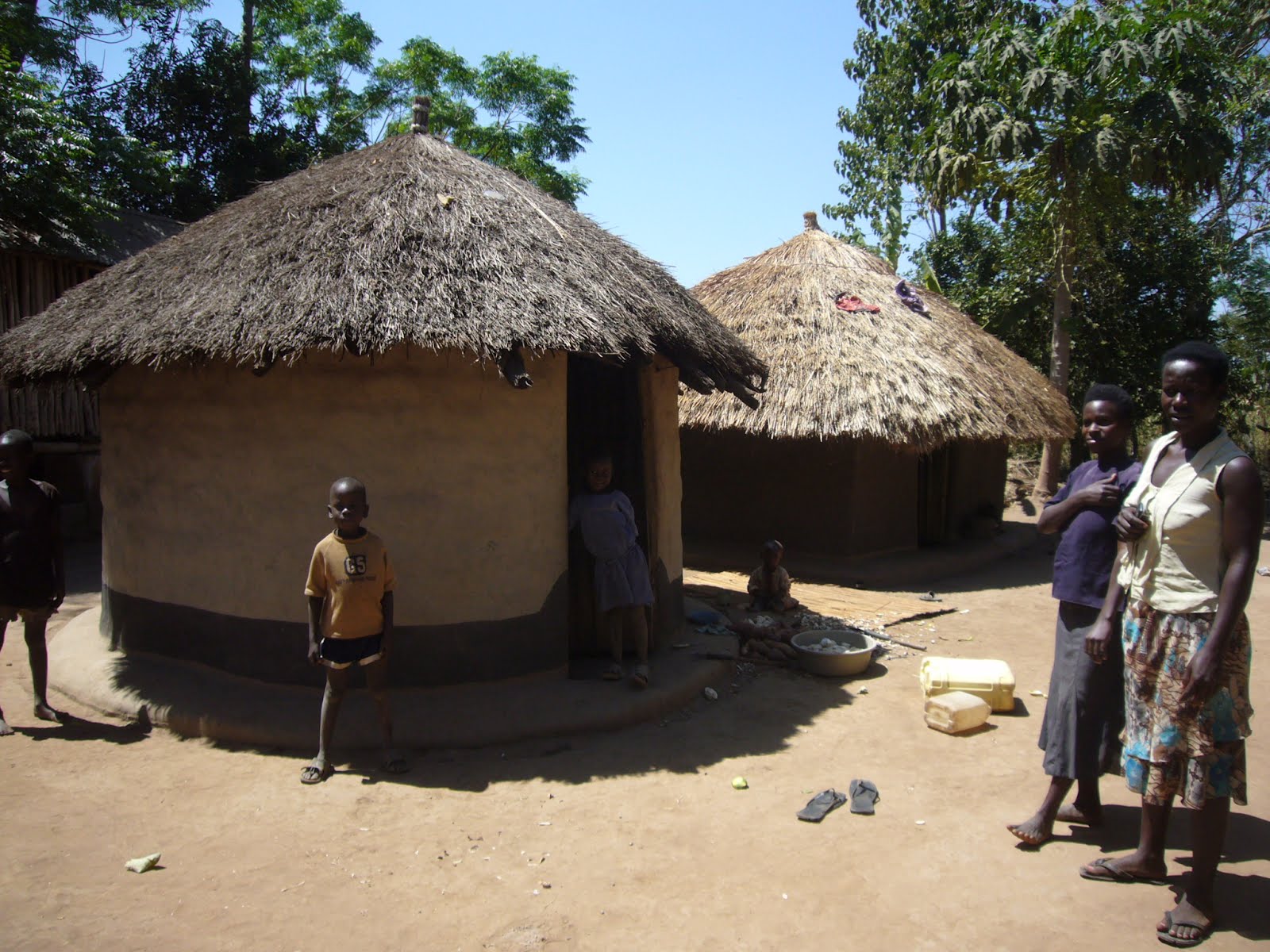
Once the others got down to business I had little to occupy my time so I decided to explore the area a bit. We had passed through a marsh on the way to the SACCO so I first walked back where I enjoyed watching cows drinking from a stream of water where some boda drivers were washing their bikes. One thing that I really liked about Lira was that people were generally less aggressive in their attempts to get my attention and sell me things. Following my walk, our driver for the day picked me up and we went for lunch. We at mud fish, which is a type of fish that live in the swamps and are caught with spears rather than fishing lines. I quite enjoyed that experience. We then visited a local market which was nice to see. In the market we met a developmentally delayed youth (who the driver referred to as insane) who took quite an interest in my camera so we had a little game of him pointing at something and asking me to take a picture, me doing so and then showing him said pictures. On the way back to the SACCO I mentioned to the driver that I was interested in seeing the inside of one of the round huts that dotted the country side and so he brought me to one that was owned by one of his friends where I was able to see the hut, which is used for cooking and some of the compound's inhabitants.
We returned to the SACCO to find our colleagues still working; fortunately I had brought a book. When that got old I decided to explore some more. This time I walked in the opposite direction from the swamp and found a small nursery school and met the owners. The head teacher names Harriet had decided to set up the school when her advice as a newly graduated teacher was not well received by her colleagues at her first job. She and James, her husband told me that the school opened in 2011 with 47 students and that in November, when the first class was having its graduation ceremony, that the ceremony was attended by some local officials who had been visiting the SACCO and had noticed what was going on. She told me that as a result of the visit they were expecting enrollment to be closer to 100 for the new year. Kind of neat to see the impact that cooperatives can have on their communities.
The next day I attended a training session on Soya beans with the gentleman described in one of my earlier posts who excitedly told us over the long car ride about his friend exploiting resources in the DRC, and the Marketing Manager. Although the ride to and from the Area Cooperative Enterprise was long and the conversation left something to be desired, it was neat to learn a bit more about agricultural practices in Uganda, even if I am allergic to soy bean protein.

My trip to Jinja was a completely different scenario. On the last Friday in January I made a two day-friend. Two day-friends are my term for people who you meet, click with instantly, but who are leaving the city within two days. This was the second two day- friend that I had made and she was a fellow Canadian. I was sitting and waiting for another friend at the national theatre, where there was a film opening taking place which I was not attending, when Tanja approached and asked if I knew what was going. We soon got down to chatting and discovered that we were both from Canada and that she was a research assistant doing work on transitional justice in Northern Uganda and so we compared notes. She spent time with my friend and I and we went for a drink. When she mentioned that she was going to Jinja the next day I asked if I could tag along since I hadn't been yet, and of course she said yes.
So the next morning we headed to the post office to catch the postbus to Jinja. For some reason the bus driver decided to leave 30 minutes early despite the fact that it wasn't full and we were left standing outside the station. Fortunately another friend and told me that one could take a minibus from the old taxi park so we headed in that direction and quickly found several buses waiting to take people to Jinja. After we first arrived in Jinja we hired two bodas to drive us to a coffee shop called Flavours that was in my guidebook. Although we had negotiated the price with the drivers one of them was kind enough to ask for an exorbitant price upon reaching our destination, I laughed and gave him what we negotiated. Flavours coffee shop was a very contemporary coffee shop by Ugandan standards with very artistic decor.
After caffinating ourselves we then headed for the source of the Nile by foot, viewing part of the city on the way. Admission to the source of the Nile is 2000 Ugandan shillings for locals and 10,000 for foreigners. This sort of price difference is common throughout the country at parks and other attractions and part of the reason I refuse to go on safari here (knowing how much less expensive it is in South Africa really doesn't help either). On this occasion I of course paid. Upon entering the park grounds we discovered a well developed craft market along the stairs leading down to the river where I bought a few things to give to people back home in Canada. At the bottom of the stairs we discovered the opportunity to go on a boat tour of the source which we also decided to go on, much to the dismay of one of the people with us, Brendan, who had a significant fear of boats and water. While touring the source we were able to see several species of birds including Kingfishers. There are two small islands which straddle the source of the Nile which is a bubbling spring which sits at the intersection between the Nile and Lake Victoria, one of which has this large tree which is full of different types of birds and is quite stunning save for the bird droppings which make the island appear as if it is covered in snow. On the island we also saw a three meter long lizard of some kind which was also rather neat. We were also briefly let off at the adjacent island where you could stand and have your picture taken with a sign that says "source of the Nile."
We then hopped on the backs of a couple of bodas to see the Bujigali falls, or what used to be the Bujigali falls. As part of the process of harnessing Hydro electric power in Uganda they are damming the Nile river which recently involved the flooding of the falls in Bujigali. Unfortunately this has resulted in the disappearance of the falls although does provide for some interesting scenery where the tops of taller trees are still sticking out through the river. I've also learned that this flooding has been a source of conflict for the community which is being mediated by the Centre for Conflict Resolution, which is one of the organizations I'm working with as part of my internship.
So I'm publishing this post from Lira where I've returned to conduct training and research. More to follow.

When I returned to work after the Christmas holidays I was anxious to visit the field since my project is primarily focused on Northern Uganda and I had not had the opportunity to go. Fortunately there was an opportunity to visit Lira within the first week so off I went, admittedly without much of a program in mind.
We arrived late on a Wednesday night and I checked in to the hotel that the field staff had booked for me. It, like the guesthouse I stayed at in Kasese, was called the white house, however it was more expensive and was not as nice. The rooms had been set up so that the window and bathroom were at the back of the room and the bed was as the front leaving only a narrow corridor for air to pass through making the hotter than Kampala temperatures even hotter. It was also a bit noisy and dirty. However, not wanting to be high maintenance I decided not to complain and stick it out.

When I did mention to one of my colleagues that I had not slept well because of the heat he ended up recommending a different hotel a bit outside the center of the city. After checking out the location I changed my accommodation and slept well my second two nights at a hotel that really had great service.
The first day I was in Lira I visited a SACCO (credit union) with the Microfinance and Data collection officers in a neighbouring district called Apac (pronouced Apache). They were visiting a SACCO to update their data to be incorporated into a database which is being developed in the district to help track SACCOs performance. This gave me the opportunity to meet with the loans officer who shared with me some of their strengths and weaknesses. I was interested to learn that many women in the district had complained that their husbands' behaviour had changed after receiving loans and it was something they were working on improving.
Once the others got down to business I had little to occupy my time so I decided to explore the area a bit. We had passed through a marsh on the way to the SACCO so I first walked back where I enjoyed watching cows drinking from a stream of water where some boda drivers were washing their bikes. One thing that I really liked about Lira was that people were generally less aggressive in their attempts to get my attention and sell me things. Following my walk, our driver for the day picked me up and we went for lunch. We at mud fish, which is a type of fish that live in the swamps and are caught with spears rather than fishing lines. I quite enjoyed that experience. We then visited a local market which was nice to see. In the market we met a developmentally delayed youth (who the driver referred to as insane) who took quite an interest in my camera so we had a little game of him pointing at something and asking me to take a picture, me doing so and then showing him said pictures. On the way back to the SACCO I mentioned to the driver that I was interested in seeing the inside of one of the round huts that dotted the country side and so he brought me to one that was owned by one of his friends where I was able to see the hut, which is used for cooking and some of the compound's inhabitants.
We returned to the SACCO to find our colleagues still working; fortunately I had brought a book. When that got old I decided to explore some more. This time I walked in the opposite direction from the swamp and found a small nursery school and met the owners. The head teacher names Harriet had decided to set up the school when her advice as a newly graduated teacher was not well received by her colleagues at her first job. She and James, her husband told me that the school opened in 2011 with 47 students and that in November, when the first class was having its graduation ceremony, that the ceremony was attended by some local officials who had been visiting the SACCO and had noticed what was going on. She told me that as a result of the visit they were expecting enrollment to be closer to 100 for the new year. Kind of neat to see the impact that cooperatives can have on their communities.
The next day I attended a training session on Soya beans with the gentleman described in one of my earlier posts who excitedly told us over the long car ride about his friend exploiting resources in the DRC, and the Marketing Manager. Although the ride to and from the Area Cooperative Enterprise was long and the conversation left something to be desired, it was neat to learn a bit more about agricultural practices in Uganda, even if I am allergic to soy bean protein.

My trip to Jinja was a completely different scenario. On the last Friday in January I made a two day-friend. Two day-friends are my term for people who you meet, click with instantly, but who are leaving the city within two days. This was the second two day- friend that I had made and she was a fellow Canadian. I was sitting and waiting for another friend at the national theatre, where there was a film opening taking place which I was not attending, when Tanja approached and asked if I knew what was going. We soon got down to chatting and discovered that we were both from Canada and that she was a research assistant doing work on transitional justice in Northern Uganda and so we compared notes. She spent time with my friend and I and we went for a drink. When she mentioned that she was going to Jinja the next day I asked if I could tag along since I hadn't been yet, and of course she said yes.
So the next morning we headed to the post office to catch the postbus to Jinja. For some reason the bus driver decided to leave 30 minutes early despite the fact that it wasn't full and we were left standing outside the station. Fortunately another friend and told me that one could take a minibus from the old taxi park so we headed in that direction and quickly found several buses waiting to take people to Jinja. After we first arrived in Jinja we hired two bodas to drive us to a coffee shop called Flavours that was in my guidebook. Although we had negotiated the price with the drivers one of them was kind enough to ask for an exorbitant price upon reaching our destination, I laughed and gave him what we negotiated. Flavours coffee shop was a very contemporary coffee shop by Ugandan standards with very artistic decor.
After caffinating ourselves we then headed for the source of the Nile by foot, viewing part of the city on the way. Admission to the source of the Nile is 2000 Ugandan shillings for locals and 10,000 for foreigners. This sort of price difference is common throughout the country at parks and other attractions and part of the reason I refuse to go on safari here (knowing how much less expensive it is in South Africa really doesn't help either). On this occasion I of course paid. Upon entering the park grounds we discovered a well developed craft market along the stairs leading down to the river where I bought a few things to give to people back home in Canada. At the bottom of the stairs we discovered the opportunity to go on a boat tour of the source which we also decided to go on, much to the dismay of one of the people with us, Brendan, who had a significant fear of boats and water. While touring the source we were able to see several species of birds including Kingfishers. There are two small islands which straddle the source of the Nile which is a bubbling spring which sits at the intersection between the Nile and Lake Victoria, one of which has this large tree which is full of different types of birds and is quite stunning save for the bird droppings which make the island appear as if it is covered in snow. On the island we also saw a three meter long lizard of some kind which was also rather neat. We were also briefly let off at the adjacent island where you could stand and have your picture taken with a sign that says "source of the
 Nile."
We then hopped on the backs of a couple of bodas to see the Bujigali falls, or what used to be the Bujigali falls. As part of the process of harnessing Hydro electric power in Uganda they are damming the Nile river which recently involved the flooding of the falls in Bujigali. Unfortunately this has resulted in the disappearance of the falls although does provide for some interesting scenery where the tops of taller trees are still sticking out through the river. I've also learned that this flooding has been a source of conflict for the community which is being mediated by the Centre for Conflict Resolution, which is one of the organizations I'm working with as part of my internship.
So I'm publishing this post from Lira where I've returned to conduct training and research. More to follow.

Saturday, January 21, 2012
Lessons from Uganda
I'm not sure what the explanation is but as soon as I came back from my trip home to Canada, everything began to change in Kampala, mostly for the better but also not in the easiest way.
Both of my room mates have decided to move out, one wants to live with her boyfriend, the other wants to live closer to town. This is not that much of a problem since I found the living situation a bit tense and received little help with cleaning and other fun stuff like that. It's a bit of a problem because I'm not sure whether we'll be able to fill one of the rooms and so it might be better to move on altogether but I'm only here two more months.
At work I was finally able to visit one of our four field offices in Lira, which was eye opening. After some careful thinking I concluded that most of the delays I've been encountering with my work are as a result of the fact that I was sent to work on a project that had not yet been approved which will begin being funded on February 1st. This leaves me with 8 weeks in which to do approximately 5 weeks worth of field work. You can probably see the difficulty there.
These changes have prompted me to delve a little bit deeper into my work and think about the theoretical and practical implications of travel and development work which I will now bore you with.
Lesson 1: Development is not entirely compatible with Capitalism
On my way to Lira last week I suddenly understood why most of the professors in my graduate program at Dalhousie were of the Marxist persuasion. I was still feeling quite angry about the fact that I had been sent to a project which had not been approved which resulted in major delays to my program and inhibited my ability to maximize the benefits of my internship. I understood that CIDA provided the organization that sent me all of the funding for the internships at the same time and so it might have been challenging to send interns at a different time but also felt that this did not seem like the best use of government money, in a time when International Development programming funds are being cut.
I was also reflecting on the observation of an Austrian colleagues that many aid organizations compromise the quality of their work through their constant fight for the next contract in which they might take up work that they are not specialized because it is trendy and attracts donors. This was also a sentiment I had heard reflected at Dal.
It was at that point that I understood that to a large extent international development is incompatible with capitalism. Broadly stated, international development is based philosophically on the idea of the redistribution of wealth to provide equal opportunity to people around the world and offset the negative impact of the colonial past. It is very much based on equality and community. In contrast capitalism reinforces competition and individualism.
Capitalism in development practice leads aid organizations to compete for funding while providing it at the lowest possible price. It encourages governments to undertake development interventions which support their own dominance and it suggests that the individuals in developed countries may not be able to enjoy the same level of comfort if others are brought out of absolute poverty which interferes with the independent and competitive nature of capitalist societies. Of course these are some of the multitude of reasons that contemporary development thinkers suggest that aid doesn't work.
Now, before you go labeling me a Pinko, I'm not suggesting that the adoption of global communism is the solution to this problem, I'm simply observing the incompatibility between capitalism and just and equal global economic distribution.
Lesson 2: Responsibilities for travelers and aid workers
Sometimes I loathe myself in Kampala. It is usually while I am walking down the street or I am waiting at a stoplight and a small hand reaches up or a face comes into view of one of the many child beggars that occupy the streets here and they pleadingly ask me for money. Knowing that by giving them money I am only sucking them further into the cycle of violence and extortion that they unjustly find themselves in. Yet, all I really want to do is take them home with me and give them an opportunity to be educated and safe. Not knowing what else to do I usually ignore them which makes me feel like a really awful person, particularly given my history of supporting the anti-poverty movement in Canada.
The alternatives of course either to give them money or to break the law and kidnap them, and I don't particularly feel the need to explore the Ugandan prison system. Some tourists do give these children money, which is contrary to the recommendations made by child protection organizations because it gives their parents, guardians or captors a reason to bring the children back to the street the next day. It has also been suggested that providing food or money to these children might result in direct violence being perpetrated by them. The best solution is for these children to be taken in by the police, but I see the police walk by these children almost on a daily basis without batting an eye.
What do you do?
Another question that I think needs to be addressed involves relationships. I have heard that quite a lot expatriates engage in relationships of different natures in Uganda. Some are relatively innocent, others are individuals seeking sex and some individuals even take advantage of the individuals who they are with. For the latter two types of relationships it must seem very simple to the expatriates who after a period of time simply leave and wash their hands of the relationships, but what of the people left behind? Many women in Uganda engage in sex work, whether formally or informally, to provide for themselves. So although she may not ask her mzungu companion for the night for money she (or he) may be hoping for a longer relationship in which they might receive some benefit like food. Further, regardless of the nature of the relationship, unless you are really committed chances are you will be leaving the person behind.
Yet, at the same time short term relationships can work out quite well for some people when there is a mutual understanding of the nature of the relationship and a relative balance in relation to power. Also, I suppose it would be unfair to suggest that just because someone has chosen to travel it should not preclude them from love or relationships. So the question becomes how to conduct such relations responsibly.
I suppose the important factor in both of these examples is self reflection. During the training session I attended in Ottawa before I came to Uganda one of the facilitators suggested that we should try not to worry about things like if we only had expat friends or if there were a national who was better qualified to do the job we were doing. I absolutely think that those are things that we as interns in our program should reflect on, along with other travelers, aid workers and expats. By behaving responsibly in relationships we can promote equality, womens' rights and human rights. By adopting accepted practices for things like approaching beggars we can prevent to continued victimization of children. By thinking about the nationals who are better qualified to do our jobs we can look for ways to engage those people in our work which may open up to opportunities for them, and through being friends not only with expats we can promote intercultural understanding both in our own lives and in the communities we live and work in.
Lesson 3: Communication and Consultation
You might notice at this point that these lessons are becoming more personal as they go and so I will end with a very personal lesson. Since I have had to try to conduct my work with very few resources I have been trying to find ways to build my organization's capacity for conflict sensitivity through a variety of means including networking with peace-organizations. I was very excited when I arrived in Lira because I knew that I would have the opportunity to go and visit a group I made contact with in Kasese in November called the Women's Peace Initiative: Lira. So on the second morning that I was in Lira I set out on my own to visit Catherine, one of the board members at WOPI. We had a great discussion in which she suggested that the project I'm working on might provide management training to the Village Savings and Loans Associations that they work with and the WOPI could in turn offer training on womens' rights and peace building.
Later in the day I sat down with two of the field officers in Lira and I started telling them about the meeting I had, had and the plans that we had made. Although I was telling them so that I could put them in touch with the organization so that the idea could be discussed further, I realized my mistake before I could even finish my first sentence. I had gone to meet with WOPI without ever having mentioned the contact to the field staff or consulting on what their possible expectations of a partnership with the organization might entail. I also might have invited them to come with me.
Realizing my mistake I apologized once I finished explaining. Although the field staff did not seem particularly affronted by my overeager actions, in the future I will know to consult further with the individuals responsible for advancing the partnership when I'm not around before trying to come up with a brilliant idea. I provided the field officers with the contact information for WOPI, I don't know whether either organization has followed up.
Before I left for Kampala I had the opportunity to have dinner with Megan Leslie (if you don't know that is you should because she's awesome) and she shared a story with me from when she was working in Ghana. After a particularly rough day, her mom sent her an email stating "Even when you fall on your face, you are still moving forward."
Both of my room mates have decided to move out, one wants to live with her boyfriend, the other wants to live closer to town. This is not that much of a problem since I found the living situation a bit tense and received little help with cleaning and other fun stuff like that. It's a bit of a problem because I'm not sure whether we'll be able to fill one of the rooms and so it might be better to move on altogether but I'm only here two more months.
At work I was finally able to visit one of our four field offices in Lira, which was eye opening. After some careful thinking I concluded that most of the delays I've been encountering with my work are as a result of the fact that I was sent to work on a project that had not yet been approved which will begin being funded on February 1st. This leaves me with 8 weeks in which to do approximately 5 weeks worth of field work. You can probably see the difficulty there.
These changes have prompted me to delve a little bit deeper into my work and think about the theoretical and practical implications of travel and development work which I will now bore you with.
Lesson 1: Development is not entirely compatible with Capitalism
On my way to Lira last week I suddenly understood why most of the professors in my graduate program at Dalhousie were of the Marxist persuasion. I was still feeling quite angry about the fact that I had been sent to a project which had not been approved which resulted in major delays to my program and inhibited my ability to maximize the benefits of my internship. I understood that CIDA provided the organization that sent me all of the funding for the internships at the same time and so it might have been challenging to send interns at a different time but also felt that this did not seem like the best use of government money, in a time when International Development programming funds are being cut.
I was also reflecting on the observation of an Austrian colleagues that many aid organizations compromise the quality of their work through their constant fight for the next contract in which they might take up work that they are not specialized because it is trendy and attracts donors. This was also a sentiment I had heard reflected at Dal.
It was at that point that I understood that to a large extent international development is incompatible with capitalism. Broadly stated, international development is based philosophically on the idea of the redistribution of wealth to provide equal opportunity to people around the world and offset the negative impact of the colonial past. It is very much based on equality and community. In contrast capitalism reinforces competition and individualism.
Capitalism in development practice leads aid organizations to compete for funding while providing it at the lowest possible price. It encourages governments to undertake development interventions which support their own dominance and it suggests that the individuals in developed countries may not be able to enjoy the same level of comfort if others are brought out of absolute poverty which interferes with the independent and competitive nature of capitalist societies. Of course these are some of the multitude of reasons that contemporary development thinkers suggest that aid doesn't work.
Now, before you go labeling me a Pinko, I'm not suggesting that the adoption of global communism is the solution to this problem, I'm simply observing the incompatibility between capitalism and just and equal global economic distribution.
Lesson 2: Responsibilities for travelers and aid workers
Sometimes I loathe myself in Kampala. It is usually while I am walking down the street or I am waiting at a stoplight and a small hand reaches up or a face comes into view of one of the many child beggars that occupy the streets here and they pleadingly ask me for money. Knowing that by giving them money I am only sucking them further into the cycle of violence and extortion that they unjustly find themselves in. Yet, all I really want to do is take them home with me and give them an opportunity to be educated and safe. Not knowing what else to do I usually ignore them which makes me feel like a really awful person, particularly given my history of supporting the anti-poverty movement in Canada.
The alternatives of course either to give them money or to break the law and kidnap them, and I don't particularly feel the need to explore the Ugandan prison system. Some tourists do give these children money, which is contrary to the recommendations made by child protection organizations because it gives their parents, guardians or captors a reason to bring the children back to the street the next day. It has also been suggested that providing food or money to these children might result in direct violence being perpetrated by them. The best solution is for these children to be taken in by the police, but I see the police walk by these children almost on a daily basis without batting an eye.
What do you do?
Another question that I think needs to be addressed involves relationships. I have heard that quite a lot expatriates engage in relationships of different natures in Uganda. Some are relatively innocent, others are individuals seeking sex and some individuals even take advantage of the individuals who they are with. For the latter two types of relationships it must seem very simple to the expatriates who after a period of time simply leave and wash their hands of the relationships, but what of the people left behind? Many women in Uganda engage in sex work, whether formally or informally, to provide for themselves. So although she may not ask her mzungu companion for the night for money she (or he) may be hoping for a longer relationship in which they might receive some benefit like food. Further, regardless of the nature of the relationship, unless you are really committed chances are you will be leaving the person behind.
Yet, at the same time short term relationships can work out quite well for some people when there is a mutual understanding of the nature of the relationship and a relative balance in relation to power. Also, I suppose it would be unfair to suggest that just because someone has chosen to travel it should not preclude them from love or relationships. So the question becomes how to conduct such relations responsibly.
I suppose the important factor in both of these examples is self reflection. During the training session I attended in Ottawa before I came to Uganda one of the facilitators suggested that we should try not to worry about things like if we only had expat friends or if there were a national who was better qualified to do the job we were doing. I absolutely think that those are things that we as interns in our program should reflect on, along with other travelers, aid workers and expats. By behaving responsibly in relationships we can promote equality, womens' rights and human rights. By adopting accepted practices for things like approaching beggars we can prevent to continued victimization of children. By thinking about the nationals who are better qualified to do our jobs we can look for ways to engage those people in our work which may open up to opportunities for them, and through being friends not only with expats we can promote intercultural understanding both in our own lives and in the communities we live and work in.
Lesson 3: Communication and Consultation
You might notice at this point that these lessons are becoming more personal as they go and so I will end with a very personal lesson. Since I have had to try to conduct my work with very few resources I have been trying to find ways to build my organization's capacity for conflict sensitivity through a variety of means including networking with peace-organizations. I was very excited when I arrived in Lira because I knew that I would have the opportunity to go and visit a group I made contact with in Kasese in November called the Women's Peace Initiative: Lira. So on the second morning that I was in Lira I set out on my own to visit Catherine, one of the board members at WOPI. We had a great discussion in which she suggested that the project I'm working on might provide management training to the Village Savings and Loans Associations that they work with and the WOPI could in turn offer training on womens' rights and peace building.
Later in the day I sat down with two of the field officers in Lira and I started telling them about the meeting I had, had and the plans that we had made. Although I was telling them so that I could put them in touch with the organization so that the idea could be discussed further, I realized my mistake before I could even finish my first sentence. I had gone to meet with WOPI without ever having mentioned the contact to the field staff or consulting on what their possible expectations of a partnership with the organization might entail. I also might have invited them to come with me.
Realizing my mistake I apologized once I finished explaining. Although the field staff did not seem particularly affronted by my overeager actions, in the future I will know to consult further with the individuals responsible for advancing the partnership when I'm not around before trying to come up with a brilliant idea. I provided the field officers with the contact information for WOPI, I don't know whether either organization has followed up.
Before I left for Kampala I had the opportunity to have dinner with Megan Leslie (if you don't know that is you should because she's awesome) and she shared a story with me from when she was working in Ghana. After a particularly rough day, her mom sent her an email stating "Even when you fall on your face, you are still moving forward."
Friday, January 13, 2012
A Funny Story...
In the last two weeks I have been deeply shocked twice, once by a story and once by the use of a word and I can no longer keep myself from writing about it. In both cases the guilty parties were using a term or story which related to great suffering to a great number of people, to illustrate amusement.
In the first case it was the use of a word. It was well after midnight on January 1, 2012 and most of us had, had more than enough to drink. My friends and I had settled into our host's living room and one male suggested that he and another male play a video game. The second male responded with "I'm totally going to rape you at that game!" This annoyed me, as it always does when people use the word rape in such a context but I let it go. There was a pause and then the second male continued to use the word three or four more times at which point I interrupted and simply said "would you stop being so negative?" Part of the reason the use of the word rape to describe anything other than a sexually violent act perpetrated against a woman, is because of my work on the conflict of the Congo and now in Uganda. Being aware of the fact that rape is often used as a weapon of war, either to repress a population or to force child soldiers into complacency, as well of the fact that it is an act which destroys the lives of women around the world is enough to turn me off from its use. After I finished talking, another woman interjected by saying "Do you have any idea what it is like being raped?" Both males went on to try to justify their use of the term and the other woman left the room followed by the host and another party guest. I followed a short time later to discover the woman standing in the backyard crying. As it turned out, she had been raped. After about 10 minutes I returned to the room where everyone else was sitting and I was upset to find the group still talking about the use of the word "rape" as an appropriate verb in conversation. Again I cut in and said "you really need to stop talking about this," they continued, I added sharply "I said, change the subject." Silence.
The second incident happened today in the car in Lango. Lango is in Northern Uganda, a district which was affected by the LRA and the northern war. I was attending a seminar at an area cooperative enterprise on soybean plantations and had driven up with the driver. On the way to the presentation I was already unimpressed with his topics of conversation which belittled women and mocked slum-dwellers (I doubt he's ever visited one). At the beginning of our return to Lira he started telling us this "amazing story". He told us of how his friend, a former Ugandan soldier who had served in the Congo (where Uganda has been found guilty of breaching international law by the International Court of Justice," has started a cross-boarder shipping business. He told us, smiling all the while of how after dropping goods off that his friend would re-load the truck with timber. He said his friend said that he didn't have to pay taxes when he brought the timber across the boarder. When I pointed out that, that was illegal, he responded that his friend had told him it required special contacts in the government. He also added that his friend had to bribe both the Congolese police and one of the ethnic (well he said rebel but I know better) groups in the area, the Lendu, with weapons and beers in order to keep his operation running. The Lendu have been engaged in a bloody ethnic conflict with the Hema for several years which has resulted in a large number of Lendu and Hema settling in a refugee camp in western Uganda as well as countless fatalities and is contributing to the overall instability in the Eastern DRC. I couldn't handle how light-heartedly this man had told us about his friend being involved in an operation which is contributing to so much suffering, not to mention a symptom of the mineral and resource exploitation which continues to contribute to Congo's ever growing poverty. I listened silently for the rest of the car ride as this Ugandan man and one of my colleagues continued to chuckle over issues such as gender inequality.
These stories are very different and yet are so intertwined in how the world has begun to perceive violence. Rather than being something unjustifiable and something that needs to be stopped, it is recounted as something simply to laugh about. It's really not funny.
In the first case it was the use of a word. It was well after midnight on January 1, 2012 and most of us had, had more than enough to drink. My friends and I had settled into our host's living room and one male suggested that he and another male play a video game. The second male responded with "I'm totally going to rape you at that game!" This annoyed me, as it always does when people use the word rape in such a context but I let it go. There was a pause and then the second male continued to use the word three or four more times at which point I interrupted and simply said "would you stop being so negative?" Part of the reason the use of the word rape to describe anything other than a sexually violent act perpetrated against a woman, is because of my work on the conflict of the Congo and now in Uganda. Being aware of the fact that rape is often used as a weapon of war, either to repress a population or to force child soldiers into complacency, as well of the fact that it is an act which destroys the lives of women around the world is enough to turn me off from its use. After I finished talking, another woman interjected by saying "Do you have any idea what it is like being raped?" Both males went on to try to justify their use of the term and the other woman left the room followed by the host and another party guest. I followed a short time later to discover the woman standing in the backyard crying. As it turned out, she had been raped. After about 10 minutes I returned to the room where everyone else was sitting and I was upset to find the group still talking about the use of the word "rape" as an appropriate verb in conversation. Again I cut in and said "you really need to stop talking about this," they continued, I added sharply "I said, change the subject." Silence.
The second incident happened today in the car in Lango. Lango is in Northern Uganda, a district which was affected by the LRA and the northern war. I was attending a seminar at an area cooperative enterprise on soybean plantations and had driven up with the driver. On the way to the presentation I was already unimpressed with his topics of conversation which belittled women and mocked slum-dwellers (I doubt he's ever visited one). At the beginning of our return to Lira he started telling us this "amazing story". He told us of how his friend, a former Ugandan soldier who had served in the Congo (where Uganda has been found guilty of breaching international law by the International Court of Justice," has started a cross-boarder shipping business. He told us, smiling all the while of how after dropping goods off that his friend would re-load the truck with timber. He said his friend said that he didn't have to pay taxes when he brought the timber across the boarder. When I pointed out that, that was illegal, he responded that his friend had told him it required special contacts in the government. He also added that his friend had to bribe both the Congolese police and one of the ethnic (well he said rebel but I know better) groups in the area, the Lendu, with weapons and beers in order to keep his operation running. The Lendu have been engaged in a bloody ethnic conflict with the Hema for several years which has resulted in a large number of Lendu and Hema settling in a refugee camp in western Uganda as well as countless fatalities and is contributing to the overall instability in the Eastern DRC. I couldn't handle how light-heartedly this man had told us about his friend being involved in an operation which is contributing to so much suffering, not to mention a symptom of the mineral and resource exploitation which continues to contribute to Congo's ever growing poverty. I listened silently for the rest of the car ride as this Ugandan man and one of my colleagues continued to chuckle over issues such as gender inequality.
These stories are very different and yet are so intertwined in how the world has begun to perceive violence. Rather than being something unjustifiable and something that needs to be stopped, it is recounted as something simply to laugh about. It's really not funny.
Sunday, January 8, 2012
Jet Lagged
Before I came back to Uganda from my trip home my friend Rachel suggested that we attend a Yoga workshop in Entebbe the Saturday after I got back (that being yesterday). Although I had only truly done yoga once before and only having a moderate interest in it I agreed since I'm trying to find a few more interesting experiences in Uganda before time runs out in March.
After a 1 hour drive from Kampala including a nauseating 20 minutes down an unpaved rural road we arrived at the Ugandan Buddhist Centre. Yes I was also surprised to learn that Uganda has a Buddhist Centre, and it also has one Ugandan Monk, although he was not present at the retreat.
The grounds of the Centre are located in a relatively poor community and so it includes a public well with safe drinking water which is a luxury that is afforded to few communities in Uganda. It is located on a small hill from which you can see other rolling hills which are common to Uganda and you also have a view of Lake Victoria if the smog is not too dense. The inside of the Centre has white tile floors, white walls and a light coloured wood ceiling. At the centre of the mid sized room is a Buddha surrounded by gold decorations. Half way through the day the Buddha was decorated with flowers and candles by some visiting SriLankan Buddhists who also brought food for the local children.
The Yoga and meditation which were part of the retreat were led by a man who was admittedly not a buddhist but a practionner of African Yoga and meditation. I have to say his skilled introduction made my first experience with meditation relatively easy, although at one point I couldn't stop thinking about Neopolitain cupcakes made by Susie's Cupcakes in Halifax (someone was kind enough to tell me later that that was a sign of a novice medidtater) (whatever). The yoga went swimmingly and had a major dance component and I was pleased because the instructor never had to correct my positioning, which was surprising given my inexperience. In the afternoon there was more yoga and then meditation.
Unfortunately the previous night I had woken up at 3:30 in the morning partially due to jet lag and partially due to barking dogs and had not been able to go back to sleep. During the second meditation while the instructor led us through the steps of feeling "the energy in our hands, the energy in arms, etc. etc., I was fighting back sleep. All of a sudden I was annoyed to be woken up by chiming, which was the instructor signaling the end of the session. Embarrassed I sat up. I had the opportunity to explain myself when the instructor asked for comments from each of the participants but I was still a bit disappointed with myself.
After a 1 hour drive from Kampala including a nauseating 20 minutes down an unpaved rural road we arrived at the Ugandan Buddhist Centre. Yes I was also surprised to learn that Uganda has a Buddhist Centre, and it also has one Ugandan Monk, although he was not present at the retreat.
The grounds of the Centre are located in a relatively poor community and so it includes a public well with safe drinking water which is a luxury that is afforded to few communities in Uganda. It is located on a small hill from which you can see other rolling hills which are common to Uganda and you also have a view of Lake Victoria if the smog is not too dense. The inside of the Centre has white tile floors, white walls and a light coloured wood ceiling. At the centre of the mid sized room is a Buddha surrounded by gold decorations. Half way through the day the Buddha was decorated with flowers and candles by some visiting SriLankan Buddhists who also brought food for the local children.
The Yoga and meditation which were part of the retreat were led by a man who was admittedly not a buddhist but a practionner of African Yoga and meditation. I have to say his skilled introduction made my first experience with meditation relatively easy, although at one point I couldn't stop thinking about Neopolitain cupcakes made by Susie's Cupcakes in Halifax (someone was kind enough to tell me later that that was a sign of a novice medidtater) (whatever). The yoga went swimmingly and had a major dance component and I was pleased because the instructor never had to correct my positioning, which was surprising given my inexperience. In the afternoon there was more yoga and then meditation.
Unfortunately the previous night I had woken up at 3:30 in the morning partially due to jet lag and partially due to barking dogs and had not been able to go back to sleep. During the second meditation while the instructor led us through the steps of feeling "the energy in our hands, the energy in arms, etc. etc., I was fighting back sleep. All of a sudden I was annoyed to be woken up by chiming, which was the instructor signaling the end of the session. Embarrassed I sat up. I had the opportunity to explain myself when the instructor asked for comments from each of the participants but I was still a bit disappointed with myself.
Monday, January 2, 2012
2011 A Year in Review
2011 was quite a challenging year for me on pretty much all fronts but held lessons that will most certainly stay with me for the rest of my life. It has also led to some positive changes.
It started on a very low note. On January 3rd, 2011 I left my position at Public Safety feeling rather defeated. I was no longer elligible for a student position and they were unable to hire me permanently. This was certainly not the reward I had been expecting for working so hard to finish my thesis.
On January 4th I started a position as a direct-dialogue fundraiser with Public Outreach Ottawa. Before you ask, yes I was one of "those people" who stood on the street and signed people up to make monthly donations to various charities. I felt very negative about starting the job, particularly since one of my friends had been kind enough to tell me that I would never succeed at the job which has minimum quotas that each employee has to meet every week, and that I should start applying to coffee shops right away. I did in fact manage to sign someone up the first day of work for the Ontario Red Cross and three people the second day. On my second day of work I also had several people share their sorrows with me and received a phone call from Foreign Affairs saying that there would be a position available for me eventually that would initally be casual but should lead to permanent employment.
By the end of January I had passed my evaluation with Public Outreach and became a full-time staff member. While I generally liked the work, there were some elements of working with PO that I really struggled with; I was the only employee with a master's degree and one of my supervisors was only 18 and we butted heads quite frequently. I also found it hard to handle the negativity I encountered from the general public while at work with many people telling me to stop begging or that I should get a real job. I was doing a real job, if people weren't out on the street signing people up for monthly giving I'm fairly convinced that none of the people who do sign up would be giving on a regular basis at all, and the canvassers aren't lying when they indicate that receiving monthly donations is more sustainable than lump sums in times of crisis.
Things weren't looking good on the room mate front either. The early tensions with one of my room mates had cleared up but my super-negative 32 year old room mate continued to provoke me into fights and didn't seem to have a nice word to say and the other one continued to steal my toiletries and food. I probably would have been with it if she had just asked. We decided to part ways at the end of March.
One great thing about January was having the opportunity to visit New Brunswick and speak in Fredericton and St. John about my experience working with the Halifax Refugee Clinic. This was my first opportunity to address a large group as a key note speaker and I certainly got my message across even if I was too nervous to be an engaging speaker. I also got to see part of Canada that I had never visited before. At the beginning of February I was also invited to present the qualitative results of my thesis at a conference at Dalhousie in mid-March which was also pretty exciting.
In February I had a wisdom tooth surgically removed from my jaw (I can't say it was pulled since they had to crack it out of my mouth) and things didn't go quite as well at Public Outreach and I was put on a working notice which I overcame in March.
At the end of March I started my position with Foreign Affairs for which I had very high expectations. I was hired on the basis that I had a strong background on the trafficking of small arms and light weapons and I was meant to contribute both to the administrative and program needs of my division. I found out on my first day of work that the deputy-director who had hired me was leaving her position and that I was going to be managed by two acting-deputy directors. It soon became clear that these acting-deputy directors were more interested in having me fill in for their incompetent administrative assistant than actually let me do any meaningful work. I did everything I was asked to do including hours of photocopying and sending pre-drafted emails. I had also been asked to draft a standard operating procedure for the entire division but had little time to work on it with all of my administrative tasks. I became very disenchanted and found it extremely hard to relate to the older women who I was working with, while this did not reflect in my job performance it certainly reflected in my attitude which was not good.
I burried my disappointment in other activities. I continued to work one day a week with Public Outreach which gave me a little bit of extra money but more importantly made me feel like I was actually doing something to contribute to the thing that I actually cared about which was human rights. My performance improved and so did my relationship with my supervisors and colleagues. I discovered that I much prefered having the opportunity to talk with the general public about human rights and charitable giving than vicariously supporting human security through providing basic office support. This led me to a major change in attitude. I had previously felt embarassed to be working with Public Outreach and that I wasn't living up to my full potential and in the end I concluded that I was much happier in that environment than somewhere where my creativity and intelect were stiffled because I was perceived as young and inexperienced and was just an extra body to compensate for someone else who was incapable of doing their job.
I also volunteered a lot for the NDP. In January I began volunteering both for Megan Leslie on the National Suicide Prevention Strategy and with the All Party Parliamentary Committee on the Prevention of Genocide which I quite enjoyed. When the election was called it put an end to my involvement with the National Suicide Prevention Strategy because the bill was killed as a result of the election and I finished my working with the All Party Parliamentary Committee. I then started to fill my hours with foot and phone canvassing for Paul Dewar the NDP MP for my riding. You can imagine we were ellated when we found out at his victory party that he had won by more than 50% and that the NDP were to make up the official opposition. We were equally heartbroken that the Conservatives won a majority. More heartbreaking still was the death of Jack Layton in late August. I still can't see a picture of him without feeling a great amount of sadness.
At the end of June I found out that Foreign Affairs would not be hiring me permanently because of a complication in the hiring process unrelated to my work performance. I was crushed. I had done everything I was asked to do with, at the very least, a forced smile on my face to no avail. After some hard thinking I concluded that I had given a lot to the job and had gained very little in terms of new skills and experience. So, I sat down with both of my acting deputy-directors and I explained that there were some things that I wanted to accomplish in my remaining month of work and fortunately they agreed. I was still doing more admin work than I would have liked but I was also able to work on some program related work and finish the 52 page long standard operating procedure for the division.
I also started doing a lot of networking and job applications and quickly got an interview for the CIDA internship which I now have. I also made it to the second round of consideration for the Canadian Museum of Human Rights, which is still keeping me updated about opennings and of course I also had that interview with Olivia Chow in September.
I also lived alone from March until August. Although my apartment was infested with mice, it was otherwise a positive experience and I gained the confidence and independence I needed to be a better roommate.
Since October I've been in Uganda which I can't say has been easy but it is most certainly worthwhile and I can say I do like my job. Since you've been reading my blog I won't bore you with the details. I also was blessed with the opportunity to come home for Christmas which has made me incredibly happy and given me a much needed reprieve.
On December 30th I arrived in Ottawa for the New Year's weekend. Upon openning my email I discovered that at approximately the same moment that I stepped out into the cold Ottawa air that I had received an email from a different division within Foreign Affairs indicating that there might be a job available to me with them in the early spring. I have also been preparing applications to do my PhD and a couple of other internships. I'm sure which ever of these opportunities work out, or even if none of them do, I'm in for a pleasant surprise later in the year.
Although I am in a relatively similar position to last year, facing uncertainty about my professional future and equally in the hole in terms of my love life (which remains non-existent) I feel very positive about my prospects which is certainly an improvement on last year. Rather than dreading what comes next I can't wait to start the next chapter!
So here's to 2012! May it be a year of development and happiness for you all!
It started on a very low note. On January 3rd, 2011 I left my position at Public Safety feeling rather defeated. I was no longer elligible for a student position and they were unable to hire me permanently. This was certainly not the reward I had been expecting for working so hard to finish my thesis.
On January 4th I started a position as a direct-dialogue fundraiser with Public Outreach Ottawa. Before you ask, yes I was one of "those people" who stood on the street and signed people up to make monthly donations to various charities. I felt very negative about starting the job, particularly since one of my friends had been kind enough to tell me that I would never succeed at the job which has minimum quotas that each employee has to meet every week, and that I should start applying to coffee shops right away. I did in fact manage to sign someone up the first day of work for the Ontario Red Cross and three people the second day. On my second day of work I also had several people share their sorrows with me and received a phone call from Foreign Affairs saying that there would be a position available for me eventually that would initally be casual but should lead to permanent employment.
By the end of January I had passed my evaluation with Public Outreach and became a full-time staff member. While I generally liked the work, there were some elements of working with PO that I really struggled with; I was the only employee with a master's degree and one of my supervisors was only 18 and we butted heads quite frequently. I also found it hard to handle the negativity I encountered from the general public while at work with many people telling me to stop begging or that I should get a real job. I was doing a real job, if people weren't out on the street signing people up for monthly giving I'm fairly convinced that none of the people who do sign up would be giving on a regular basis at all, and the canvassers aren't lying when they indicate that receiving monthly donations is more sustainable than lump sums in times of crisis.
Things weren't looking good on the room mate front either. The early tensions with one of my room mates had cleared up but my super-negative 32 year old room mate continued to provoke me into fights and didn't seem to have a nice word to say and the other one continued to steal my toiletries and food. I probably would have been with it if she had just asked. We decided to part ways at the end of March.
One great thing about January was having the opportunity to visit New Brunswick and speak in Fredericton and St. John about my experience working with the Halifax Refugee Clinic. This was my first opportunity to address a large group as a key note speaker and I certainly got my message across even if I was too nervous to be an engaging speaker. I also got to see part of Canada that I had never visited before. At the beginning of February I was also invited to present the qualitative results of my thesis at a conference at Dalhousie in mid-March which was also pretty exciting.
In February I had a wisdom tooth surgically removed from my jaw (I can't say it was pulled since they had to crack it out of my mouth) and things didn't go quite as well at Public Outreach and I was put on a working notice which I overcame in March.
At the end of March I started my position with Foreign Affairs for which I had very high expectations. I was hired on the basis that I had a strong background on the trafficking of small arms and light weapons and I was meant to contribute both to the administrative and program needs of my division. I found out on my first day of work that the deputy-director who had hired me was leaving her position and that I was going to be managed by two acting-deputy directors. It soon became clear that these acting-deputy directors were more interested in having me fill in for their incompetent administrative assistant than actually let me do any meaningful work. I did everything I was asked to do including hours of photocopying and sending pre-drafted emails. I had also been asked to draft a standard operating procedure for the entire division but had little time to work on it with all of my administrative tasks. I became very disenchanted and found it extremely hard to relate to the older women who I was working with, while this did not reflect in my job performance it certainly reflected in my attitude which was not good.
I burried my disappointment in other activities. I continued to work one day a week with Public Outreach which gave me a little bit of extra money but more importantly made me feel like I was actually doing something to contribute to the thing that I actually cared about which was human rights. My performance improved and so did my relationship with my supervisors and colleagues. I discovered that I much prefered having the opportunity to talk with the general public about human rights and charitable giving than vicariously supporting human security through providing basic office support. This led me to a major change in attitude. I had previously felt embarassed to be working with Public Outreach and that I wasn't living up to my full potential and in the end I concluded that I was much happier in that environment than somewhere where my creativity and intelect were stiffled because I was perceived as young and inexperienced and was just an extra body to compensate for someone else who was incapable of doing their job.
I also volunteered a lot for the NDP. In January I began volunteering both for Megan Leslie on the National Suicide Prevention Strategy and with the All Party Parliamentary Committee on the Prevention of Genocide which I quite enjoyed. When the election was called it put an end to my involvement with the National Suicide Prevention Strategy because the bill was killed as a result of the election and I finished my working with the All Party Parliamentary Committee. I then started to fill my hours with foot and phone canvassing for Paul Dewar the NDP MP for my riding. You can imagine we were ellated when we found out at his victory party that he had won by more than 50% and that the NDP were to make up the official opposition. We were equally heartbroken that the Conservatives won a majority. More heartbreaking still was the death of Jack Layton in late August. I still can't see a picture of him without feeling a great amount of sadness.
At the end of June I found out that Foreign Affairs would not be hiring me permanently because of a complication in the hiring process unrelated to my work performance. I was crushed. I had done everything I was asked to do with, at the very least, a forced smile on my face to no avail. After some hard thinking I concluded that I had given a lot to the job and had gained very little in terms of new skills and experience. So, I sat down with both of my acting deputy-directors and I explained that there were some things that I wanted to accomplish in my remaining month of work and fortunately they agreed. I was still doing more admin work than I would have liked but I was also able to work on some program related work and finish the 52 page long standard operating procedure for the division.
I also started doing a lot of networking and job applications and quickly got an interview for the CIDA internship which I now have. I also made it to the second round of consideration for the Canadian Museum of Human Rights, which is still keeping me updated about opennings and of course I also had that interview with Olivia Chow in September.
I also lived alone from March until August. Although my apartment was infested with mice, it was otherwise a positive experience and I gained the confidence and independence I needed to be a better roommate.
Since October I've been in Uganda which I can't say has been easy but it is most certainly worthwhile and I can say I do like my job. Since you've been reading my blog I won't bore you with the details. I also was blessed with the opportunity to come home for Christmas which has made me incredibly happy and given me a much needed reprieve.
On December 30th I arrived in Ottawa for the New Year's weekend. Upon openning my email I discovered that at approximately the same moment that I stepped out into the cold Ottawa air that I had received an email from a different division within Foreign Affairs indicating that there might be a job available to me with them in the early spring. I have also been preparing applications to do my PhD and a couple of other internships. I'm sure which ever of these opportunities work out, or even if none of them do, I'm in for a pleasant surprise later in the year.
Although I am in a relatively similar position to last year, facing uncertainty about my professional future and equally in the hole in terms of my love life (which remains non-existent) I feel very positive about my prospects which is certainly an improvement on last year. Rather than dreading what comes next I can't wait to start the next chapter!
So here's to 2012! May it be a year of development and happiness for you all!
Subscribe to:
Posts (Atom)